
What the USB-IF Program Actually Certifies
For B2B buyers and private-label brands sourcing data cables, the phrase “USB-IF certified” shows up on more product pages every quarter. But what does the mark really guarantee, what does it cost, and when does your brand actually need it? This guide explains the USB-IF compliance program from a cable-brand perspective — and where a Dongguan OEM/ODM like HWD fits in.
The USB Implementers Forum (USB-IF) runs the compliance program for the USB ecosystem. For cables, certification confirms that a cable assembly meets the electrical, mechanical, and signal-integrity requirements of the relevant USB specification for the capabilities it claims — speed rating and power rating. It does not certify the finished product as a whole, and using a certified cable does not by itself certify the devices it connects to.
Two rules from the official USB-IF cable program matter most for brands:
- Power marking is mandatory. Every USB-C to USB-C cable must carry a 60W or 240W power mark before compliance testing begins, so the lab can confirm the intended rating. Most cables must also show the supported data rate (USB 2.0 cables are the exception).
- Eligibility is narrow. Captive or permanently attached cables are not eligible. Both ends must use USB-defined connectors, and the connectors used must themselves be certified before the cable assembly is submitted — the USB-IF verifies the TID of each connector component.

Why the Mark Matters for Your Brand
In 2026, mandatory Type-C policies are in force across the EU (Common Charger Directive), Saudi Arabia, Korea and other markets. USB-IF listing is not the same legal step as CE or FCC, but retailers, marketplaces, and B2B buyers increasingly ask for the TID (Test ID) as proof a cable is not a spoofed, substandard part.
- Market access: High-power and high-speed SKUs headed to regulated markets face tougher listing checks; a verifiable TID lowers rejection risk.
- Platform trust: Major marketplaces have tightened requirements for USB-C and high-wattage cables. A real TID reduces listing takedowns and chargeback disputes.
- Anti-counterfeit signal: The logo is verified by the test lab on the product itself. If a cable fails, it is not authorized to bear the mark — so the logo plus a lookupable TID is a strong quality signal to downstream buyers.
The Certification Path (and What It Costs)
Certification requires USB-IF membership. Per 2026 quotes from third-party certification labs, a full member pays roughly USD 5,000/year and receives a reusable Vendor ID (VID) usable across multiple products; smaller programs can take a non-member path (about USD 6,000 for a VID plus roughly USD 3,500 for a two-year trademark license). Treat these as typical lab figures and confirm with USB-IF or your chosen lab.
| Stage | What happens | Typical timeline |
|---|---|---|
| Preparation | Use already-certified connectors, PD and E-marker chips; run pre-compliance at an authorized lab to catch ~80% of design issues early. | ~1 week pre-test |
| Formal testing | At a USB-IF authorized ITL lab: electrical conformance, PD protocol, and interoperability with mainstream hosts. | Standard USB-C cable 3–4 weeks; USB4 / EPR longer |
| Listing & TID | USB-IF issues a unique TID (no paper certificate) entered in the public database; sign the Trademark License Agreement to print the logo. | Review ~1–2 weeks |
In 2026 the old USB PD3.1 grace period has expired and USB4 2.0 (80Gbps) testing is fully implemented, so complex products face more detailed testing. Enforcement on logo misuse is stricter: a 60W cable must not display a 240W mark, and violations can cancel certification.
USB-IF vs CE / FCC / RoHS — They Don’t Replace Each Other
These marks answer different questions, and a cable can carry one without the others:
- USB-IF — interoperability and capability validation (private standard body).
- CE (EU) / FCC (US) — electromagnetic compatibility and safety/regulatory marking.
- RoHS — restriction of hazardous substances in materials.
For global B2B distribution you usually need the regulatory marks (CE/FCC/RoHS) and — increasingly for high-power or high-speed lines — a USB-IF TID buyers can verify.
Where HWD Fits as Your OEM/ODM Partner
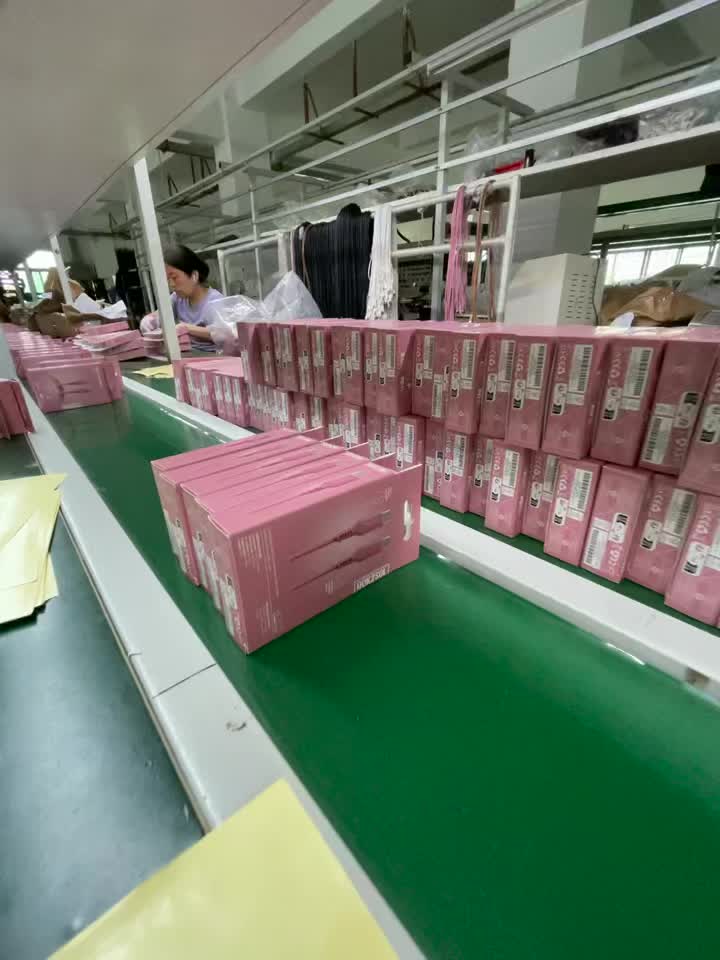
HWD is a Dongguan custom data-cable manufacturer: USB-C, Lightning, Micro-USB, braided, TPE/PVC jackets, E-marker 60W/100W lines, and USB 2.0/3.0/3.1 builds. We manufacture cables to USB-IF specifications and select certified connectors and chips so your path to listing is smoother.
For brands that need a certified line, we can support the certification build and the required documentation. Confirm current certification status and the exact TID scope with our team before you publish any compliance claim — we will not state a certification we do not hold.
As a one-stop factory, you can also pair your data cables with HWD-brand chargers from the same line — a convenient companion product, not the headline. We offer OEM/ODM, small MOQ, in-house tooling and soldering, and 100% electrical testing on every batch.
Practical Takeaways for Sourcing Managers
- Decide by market: EU, laptop, and high-power SKUs should plan for USB-IF listing early in the project, not after tooling.
- Verify, don’t trust: A logo means little without a TID you can look up in the public database.
- Build right from day one: Specify certified connectors and E-marker chips in the BOM to avoid costly re-spins.
- Ask for mapped specs: Request spec sheets that tie claimed speed and power to the testable marks (60W/240W, data rate).
Need a data-cable partner who builds to spec and supports your certification path? Talk to the HWD team about OEM/ODM samples.