

Why the Cable Jacket Deserves a Line in Your RFQ
For most B2B buyers, the cable jacket is an afterthought. They spec the connector, the AWG, the E-Marker, then let the factory “just use the usual material.” That habit quietly drives three costs you do see: warranty returns, customs compliance friction, and a retail price ceiling you never chose. The outer jacket is not decoration. It decides flexibility, abrasion resistance, cold-weather behavior, and how much chemical documentation you will need to import the cable at all.
A useful reality check: the USB Type-C Cable and Connector Specification Release 2.5 (dated 8 April 2026) defines mechanical limits tightly — a 10,000-cycle connector durability rating, a 40 N axial pull-out load held for one minute, and insertion/extraction force held between 6 and 20 N after 10,000 cycles — but it says nothing about whether the jacket should be PVC, TPE, or braided. The material decision is yours to write into the contract, not the standard’s.

The Three Jacket Materials, Plainly
PVC (Polyvinyl Chloride) is the budget baseline. It extrudes easily, comes in any color, and keeps the bill of materials low. Its weakness is mechanical and thermal: it stiffens in the cold (roughly −10 °C to +70 °C service window) and can harden or crack at the strain relief after repeated bending. For promotional giveaways and high-volume entry-level SKUs, it is the rational choice — provided you audit it.
TPE (Thermoplastic Elastomer) behaves like rubber but processes like plastic. A good TPE blend runs from roughly −50 °C to +125 °C, resists yellowing and plasticizer migration far better than PVC, and gives the soft-touch feel premium brands want. EU importers favor it because quality TPE is inherently phthalate-free, which lowers RoHS and REACH friction. Expect a 40%–60% cost premium over a basic PVC build.
Braided construction is not a base material — it is armor wrapped over an inner TPE or PVC jacket, usually nylon or a Kevlar blend. What it adds is abrasion resistance, tangle resistance, and a 4–6 year perceived lifespan. It does not move the electrical failure point; the connector and strain relief stay the weakest link. Budget a 100%–200% premium over PVC, justified by lower return rates and higher shelf appeal.
Side-by-Side Comparison
| Criterion | PVC | TPE | Braided (over TPE/PVC) |
|---|---|---|---|
| Relative cost | Baseline (lowest) | +40% to +60% | +100% to +200% |
| Service temperature | ≈ −10 °C to +70 °C | ≈ −50 °C to +125 °C (blend-dependent) | Depends on inner jacket |
| Estimated bend life | 700–1,000 cycles (6–12 mo) | 5,000–7,000 cycles (2–3 yr) | 10,000+ cycles (4–6 yr) |
| Abrasion resistance | Low | Moderate | Highest |
| Compliance profile | Needs strict phthalate/lead checks | Naturally phthalate-free | Adds no compliance value |
| Best market fit | Promos, budget retail | Mid-tier, EU, hot climates | Premium tech accessories |
Note the bend-life numbers are industry estimates, not a USB-IF test result. The official cable flexing test in the spec asks for only 100 cycles in two planes. Always demand a vendor bend report that states the test radius, load, and cycle count before you put a number in a purchase contract.
The Myth: Jacket Material Does Not Change Charging Speed
A braided cable is not “faster” than a PVC one. Charging watts and data rate are set by the internal copper (AWG gauge), the E-Marker chip on any USB-C to USB-C cable rated above 3 A, and the connector spec — not by the outside sleeve. Where the jacket does matter for performance is heat: in 240W PD 3.1 or tropical deployments, cheap PVC can soften and accelerate strain-relief failure, while a quality TPE or braided-over-TPE build holds its shape. Match the material to the thermal load, not to a speed claim.

Compliance Red Lines Buyers Must Verify
- RoHS phthalates: DEHP, BBP, DBP, and DIBP are capped at 0.1% by weight in homogeneous materials. A generic “RoHS compliant” stamp does not answer the lead-in-PVC question.
- REACH lead in PVC: restricted under Annex XVII entry 63 at 0.1%; heavily enforced since 2024. The ECHA Candidate List stood at 253 SVHC entries as of February 2026.
- Halogen-free / LSZH trend: 2026 sourcing is shifting toward low-smoke zero-halogen builds. LSZH compounds can cut smoke by around 70% versus PVC and hold light transmittance above 60% in combustion tests. If claimed, require IEC 60754-3 (compound level) or IEC 62821 (cable level) reports.
- MFi note: for Lightning cables, Apple’s MFi program is a separate licensing lane. Treat it as a buyer compliance requirement, not something assumed in a factory quote.
How HWD Builds Jacket Choice Into the Order
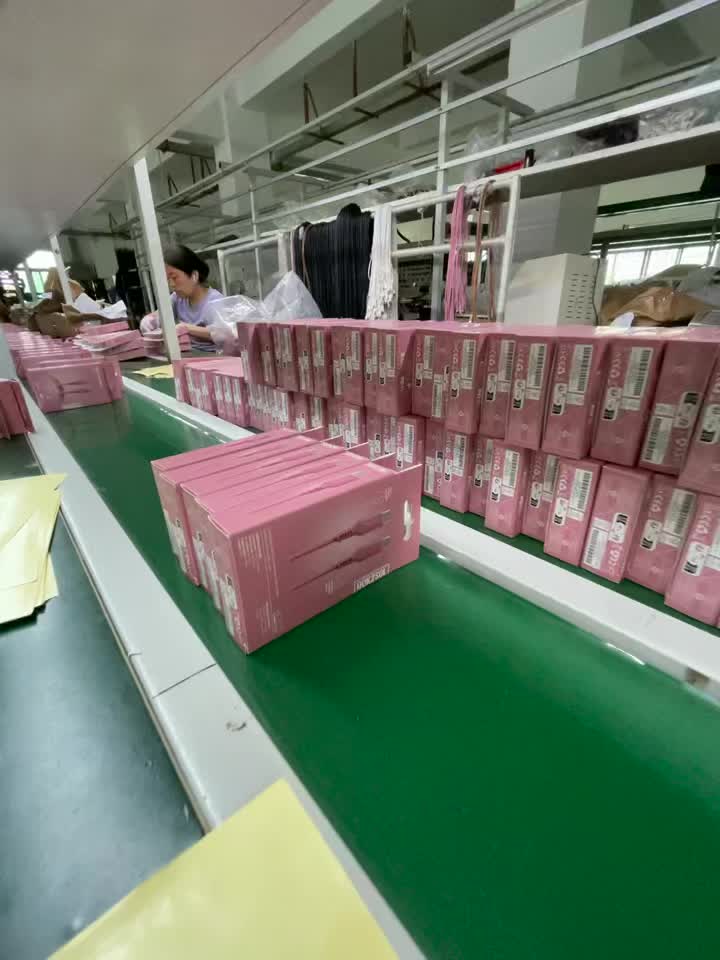
As a Dongguan custom data-cable factory, HWD treats jacket material as a first-order spec, not a default. We run OEM/ODM programs where connector type, length, jacket (PVC, TPE, or braided), color, and logo are all configurable, with small MOQ and in-house molding, welding, and 100% electrical testing. Our cables are built to CE, FCC, and RoHS expectations, and we supply the material datasheet and compliance documents buyers need for customs.
For brands that want a complete desk solution, our HWD-brand chargers are available as a companion line so data cables and power adapters ship from one factory and one quality system — a convenience, not the headline. The data cable remains the product we engineer hardest.
Which Jacket Should You Specify?
- PVC — when unit price dominates and expected service life is under a year (promos, bundled accessories).
- TPE — when you ship to the EU, face 240W thermal loads, or want a balanced 2–3 year lifespan with easier compliance.
- Braided over TPE — when retail presentation, tangle resistance, and a 10,000+ bend story justify the premium tier.
Start the conversation with the jacket on the RFQ, not after the first return batch. Tell us your target market, expected environment, and price tier, and we will propose the compound and the bend-test protocol in writing before tooling begins.