

Why a “Bargain” Cable Can Cost Your Brand Far More Than Its Price Tag
A counterfeit USB-C cable rarely looks wrong. The molding is clean, the packaging has a convincing logo, and the listing promises “100W fast charge” for a few dollars. To the eye, it is identical to a certified cable. To your customer’s laptop, phone, or power station, it is a gamble — and when that gamble fails, the refund, the bad review, and the damaged-device photo all land on your brand, not the anonymous factory that made it.
For B2B buyers — importers, distributors, and private-label brands — the math is brutal. A single bad batch can trigger a wave of RMAs, marketplace takedowns, or, in the worst case, a safety recall. The good news: counterfeit and substandard cables are predictable, and a disciplined sourcing checklist keeps them out of your supply chain.
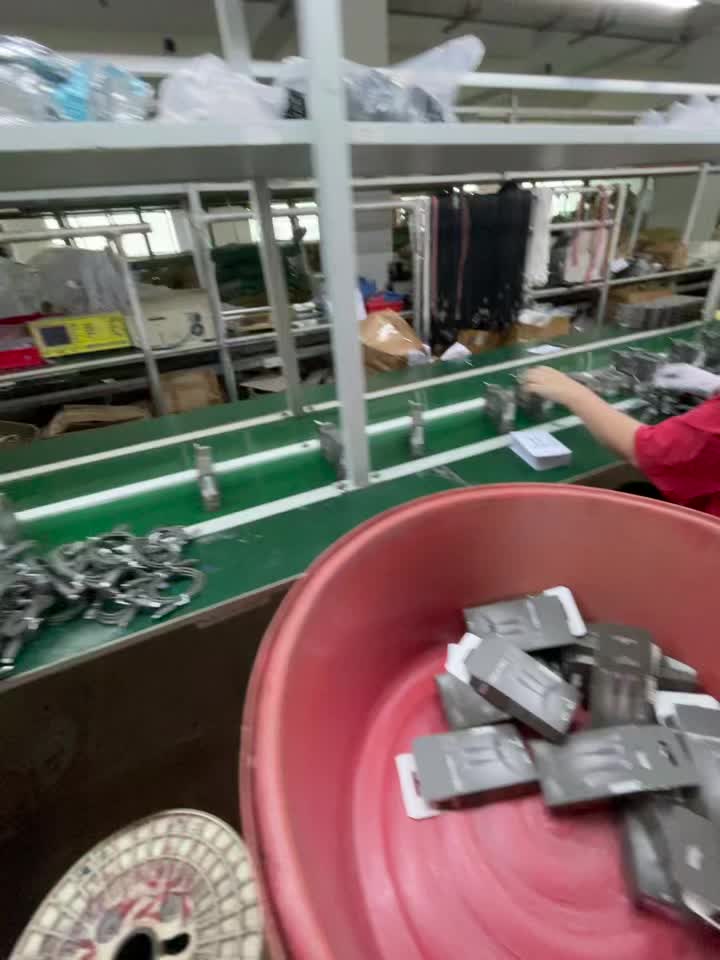
The 2026 Counterfeit Problem, in Numbers
Counterfeiting is not a fringe issue. Independent industry reporting from 2026 shows the problem is growing, especially in high-power USB-C cables sold through social-commerce channels:
- According to the USB-IF Q1 2026 report, 68% of uncertified 240W USB-C cables sold on social-commerce platforms failed basic safety tests — up 22% compared with 2024.
- Of those knockoffs, 72% now carry spoofed E-Marker chips that fool older USB testers into displaying fake 48V/5A ratings.
- The U.S. Consumer Product Safety Commission’s 2026 annual safety report linked 38% of 2025 portable power-station fire incidents to uncertified 240W cables.
- Up to 78% of 2025-and-later counterfeit cables ship with firmware that reports false power ratings on basic testers — meaning a visual or cheap-meter check is no longer enough.
None of those failures are subtle. They are exactly the kind of field returns that erode a distributor’s margin and a brand’s reputation.
What a Genuine Cable Actually Contains
Understanding why fakes fail starts with what a compliant cable must do. USB-C is not a passive wire; it is an active negotiation between charger, cable, and device.
| Component | What it does | What a substandard cable skips |
|---|---|---|
| E-Marker chip | Reports the cable’s true current and power limit (mandatory above 3A / 60W) | Chip omitted or spoofed, so the device pulls more power than the wire can safely carry |
| Conductor gauge | Thicker wires (e.g. 20–22 AWG) keep resistance and heat low at high wattage | Thin conductors that overheat during fast charging |
| Shielding | Contains electrical noise so data lines stay clean | Poor or absent shielding causing flicker, disconnects, data corruption |
| Strain relief & molding | Absorbs bend stress at the connector | Brittle joints that break internally after weeks of use |
When a counterfeit cable lies about its rating, the device on the other end may try to pull 100W through a wire built for 15W. The result is heat, melted insulation, short circuits, and — at the extreme — battery thermal runaway.

A Practical Inspection Checklist for B2B Buyers
You do not need a lab to screen suppliers, but you do need a system. Adapt this field checklist before any bulk order is confirmed:
- Define the spec first. Charging only, data transfer, video, or full-feature? Vague “fast charge” claims usually hide weak internals.
- Verify USB-IF certification by TID. Every certified cable has a unique Test ID. Look it up on the official usb.org product database — a logo on the box is not proof.
- Check the E-Marker. For any cable rated above 60W, confirm a real 5A E-Marker (or E-Marker 2.0 for 240W EPR). Under load, a spoofed chip will collapse to 60W or less.
- Inspect the connector. Count the pins and check finish. A genuine USB-C plug is precise, single-piece, and free of burrs.
- Weigh it. High-power cables are thicker and heavier. A noodle-thin “100W” cable has almost certainly cut its conductors.
- Test before you trust. Run a power-meter load test and a real data-speed test on samples. A labeled-USB 3.0 cable that delivers 30–40 MB/s is a fake.
- Watch the price. A 100W cable for under ten dollars is, in this industry, almost certainly too good to be true.
USB-IF Certification: The Verification That Can’t Be Faked
Counterfeiters can copy a logo and print a TID, but they cannot forge the record in the USB-IF public database. That makes TID lookup the single most reliable screen available to a buyer. Ask every supplier for the TID tied to the exact model you are buying — not a sister product, not the factory’s one certified sample. Cross-check the TID against the listed speed, current, and company name. If it does not match, walk away.
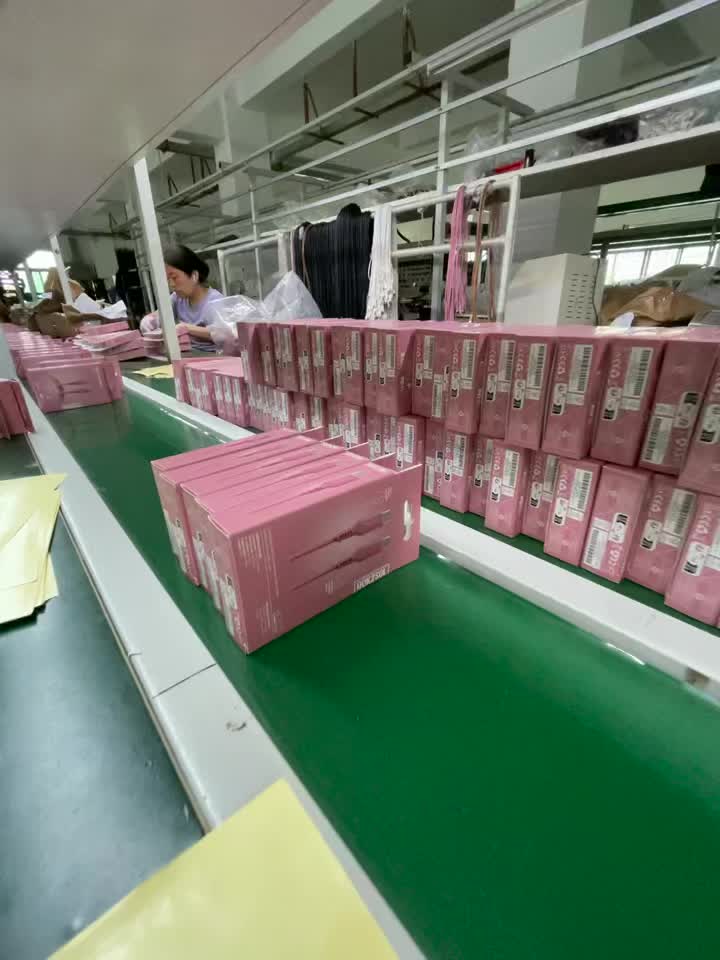
How HWD Builds Counterfeit-Free Cables
At HWD (Huiwenda), a custom data-cable factory in Dongguan, China, the defense against substandard output is built into the production line rather than bolted on at inspection:
- In-house molding, wire processing, and soldering — every stage is controlled on-site, so material substitutions cannot slip in undetected.
- 100% electrical testing on finished cables: continuity, insulation, and (for PD cables) E-Marker verification, so a mislabeled wattage never ships.
- Declared, verifiable certifications. HWD cables are built to CE, FCC, and RoHS requirements. For Apple-ecosystem SKUs, we advise buyers on MFi compliance pathways rather than implying certification that is not in place.
- OEM/ODM flexibility with small MOQ — custom connectors, length, jacket (braided / TPE / PVC), color, and logo without forcing a container-scale commitment.
As a companion line, HWD also supplies its own-brand chargers so a brand can pair a verified cable with a matching power source from one factory — reducing the mixed-supply risk where an uncertified third-party charger undermines an otherwise good cable.
Building a Supply Chain You Can Defend
Avoiding counterfeit cables is less about finding one perfect product and more about building a repeatable process: specify the real requirement, demand a verifiable TID, load-test samples, and partner with a factory that tests 100% of output. For importers and private-label brands, that discipline is the difference between a quiet quarter and a recall.
If you are sourcing custom USB-C, braided, or OEM data cables and want a sample batch screened to spec, HWD’s team can walk you through the cable’s true rating before you commit to volume. The few dollars saved on a questionable cable is never worth the brand you built.